

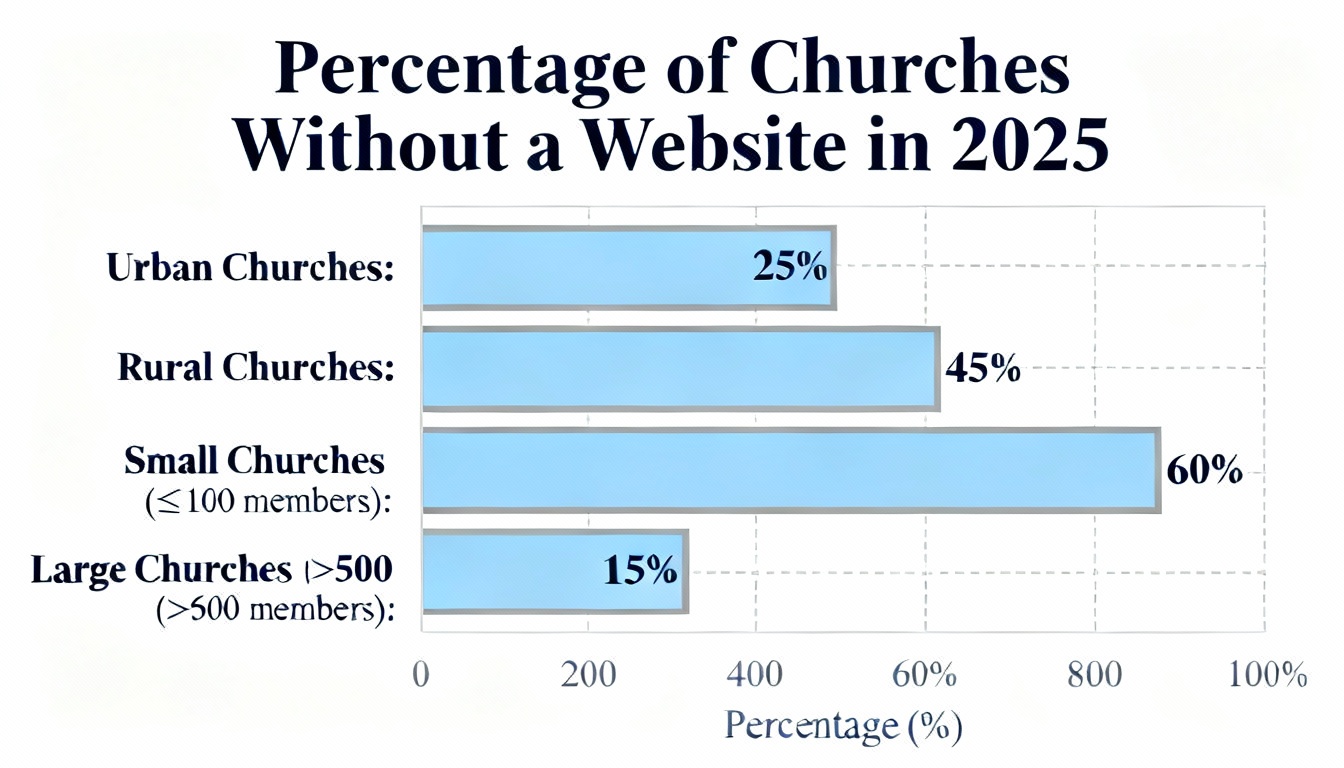
In 2025, it surprises many people to learn that roughly 12% of U.S. churches still do not have a website.
Not a broken website.
Not an outdated website.
No website at all.
This isn’t because these churches don’t care about outreach. In most cases, it’s because leaders feel overwhelmed, under-resourced, or unsure where to start.
The good news? This is one of the easiest problems in modern ministry to fix—and the impact is immediate.
Why Not Having a Website Is a Bigger Problem Than It Used to Be
Ten or fifteen years ago, a church could survive without a website. Word of mouth, signage, and denominational directories did most of the work.
That is no longer true.
Today:
-
People search online before they visit
-
Google Maps is often the first “church directory”
-
Younger families rarely attend without researching first
-
AI-driven search tools pull from websites, not bulletins
Without a website, your church is effectively invisible to anyone who doesn’t already know you exist.
The Real Reasons Churches Still Don’t Have Websites
This isn’t about laziness or resistance to change. Most churches without websites fall into a few understandable categories.
Reason 1: “We Don’t Have the Budget”
Small churches often assume a website requires:
-
Thousands of dollars
-
A long-term contract
-
Ongoing technical maintenance
That used to be true. It isn’t anymore.
In 2025, a church website can be launched affordably and maintained simply, without custom development or ongoing fees that strain the budget.
The issue isn’t money—it’s outdated assumptions.
Reason 2: “We Don’t Have Anyone Tech-Savvy”
Many pastors and ministry teams feel unqualified to manage a website.
Common thoughts:
-
“I wouldn’t know where to start”
-
“I’m afraid I’ll break something”
-
“We don’t have a media team”
But modern church websites are no longer built for developers. They’re built for non-technical users.
You don’t need a webmaster. You need clarity about what information people are looking for.
Reason 3: “Facebook Is Our Website”
This is one of the most common explanations—and one of the most dangerous.
Social media pages are not a replacement for a website because:
-
You don’t control the platform
-
Content is hard to find later
-
Search engines don’t treat social pages the same way
-
Visitors struggle to find service times and details
Facebook supports your outreach. It should not replace your digital home base.
Reason 4: “Most of Our People Already Know Us”
This is true—and also the problem.
Websites are not built for members.
They are built for people who haven’t attended yet.
If your church is called to reach new people, your online presence must reflect that mission.
What Not Having a Website Is Costing Your Church
The cost is not abstract. It’s practical and immediate.
Without a website:
-
You don’t show up for “church near me” searches
-
Visitors can’t confirm service times
-
Families can’t check kids’ programs
-
New residents choose other churches
-
Your outreach depends entirely on insiders
People are not rejecting your church. They simply can’t find it.
How to Fix This Fast (Without Overthinking It)
You do not need a complex website to fix this problem. You need a clear one.
Here’s the fastest, most realistic path forward.
Step 1: Start With the Bare Minimum That Actually Works
A church website does not need dozens of pages.
At minimum, you need:
-
Homepage
-
Service times
-
Location and directions
-
What to expect
-
Kids information
-
Contact info
That’s it.
Anything beyond that is a bonus.
Step 2: Prioritize Clarity Over Creativity
Many churches delay launching because they want it to be “just right.”
In reality:
-
A simple, clear website beats a perfect unfinished one
-
People value answers, not design awards
-
Search engines reward clarity
Focus on being helpful, not impressive.
Step 3: Make It Mobile-Friendly From Day One
Most people searching for churches are on their phones.
Your website must:
-
Load quickly
-
Show service times immediately
-
Have clickable directions
-
Be easy to read without zooming
If it doesn’t work on a phone, it doesn’t work.
Step 4: Write for First-Time Visitors, Not Members
Assume the reader:
-
Has never been to your church
-
Doesn’t know church language
-
Is nervous about visiting
Explain things simply:
-
What happens in a service
-
How long it lasts
-
What people wear
-
What happens with kids
This builds confidence and trust.
Step 5: Launch Now, Improve Later
This is the most important mindset shift.
A website is not a one-time project. It’s a living tool.
Launch with what you have. Improve as you go.
Every week without a website is a missed opportunity for connection.
A Simple Reality Check for Church Leaders
Ask yourself:
If someone moved to our city this week, could they confidently visit our church using only what they find online?
If the answer is “no,” the problem isn’t outreach—it’s visibility.
Final Thought: A Website Is Not a Luxury Anymore
In 2025, having no website doesn’t communicate simplicity or tradition.
It communicates absence.
Your church may be faithful, welcoming, and active in ministry—but if people can’t find you, they can’t experience that.
The fix doesn’t require tech expertise, big budgets, or long timelines.
It requires a decision to be findable.

0 Comments