

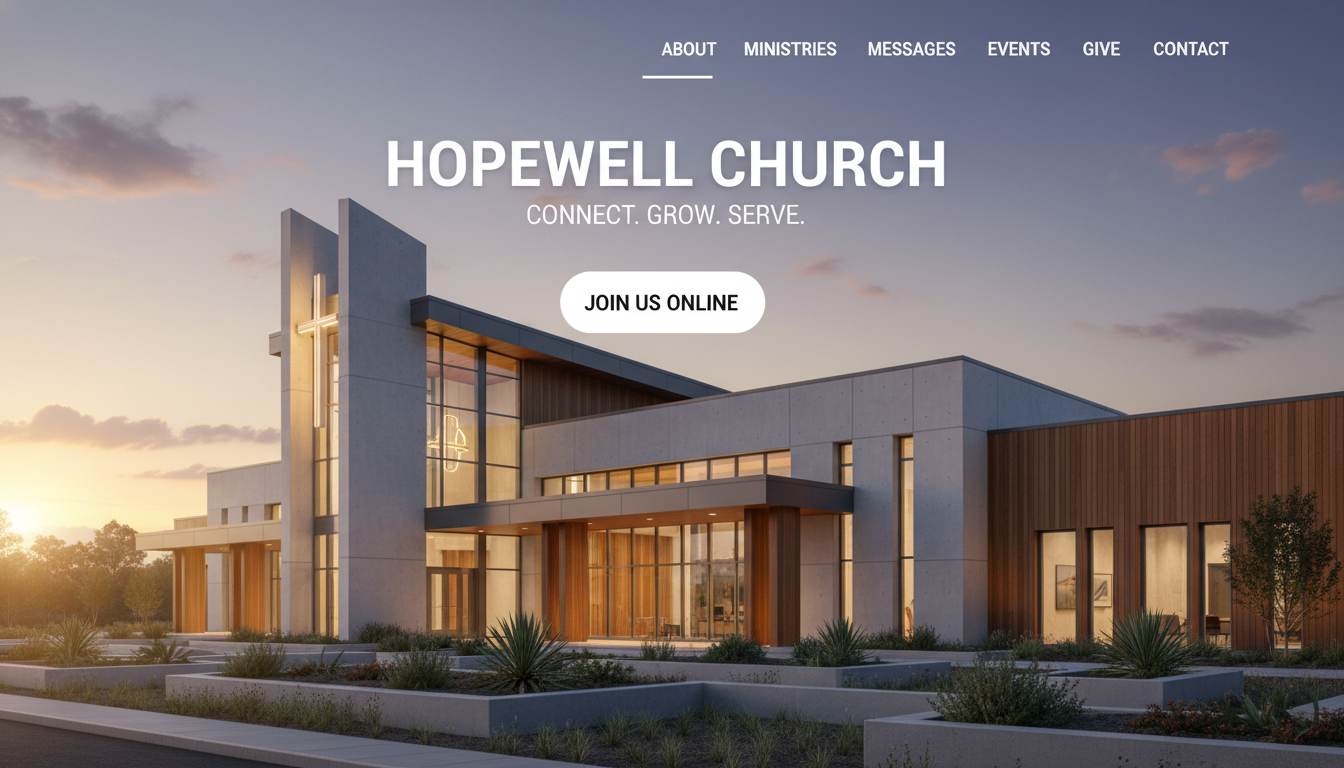
Your church website is no longer a digital bulletin board. In 2026, it is your primary front door, your first impression, and often your most consistent outreach tool. Most people will visit your website long before they ever visit your building. And in many cases, they’ll decide whether or not to come based on what they experience in the first 10–20 seconds. Here are the seven non-negotiable features every modern church website must have in 2026—and how to implement them without overcomplicating things.
1. A Clear “Plan Your Visit” Church Website Experience
This is the single most important feature on a church website today. Visitors are not looking to explore every page. They are looking for reassurance and clarity. A strong “Plan Your Visit” experience should answer:
- Where is the church located?
- What time are services?
- What should I expect?
- What about kids?
- What should I wear?
Practical implementation:
- Add a visible “Plan Your Visit” button on the homepage
- Create a dedicated page for first-time visitors
- Use simple, welcoming language
- Include photos of real people and real services
If visitors can’t picture themselves attending, they won’t.
2. Mobile-First Design (Not Mobile-Friendly—Mobile-First)
In 2026, most church website traffic comes from mobile devices. If your site was designed primarily for desktop, it’s already outdated. Mobile-first means:
- Service times visible without scrolling
- Clickable phone numbers and addresses
- Large buttons instead of tiny links
- Fast load times on cellular networks
A simple test: Can someone find your service time, address, and kids information within 5 seconds on their phone? If not, you’re losing visitors.
3. Service Times and Location Front and Center
This sounds obvious, yet it’s one of the most common mistakes churches make. People should never have to search for:
- Service times
- Address
- Parking information
Best practice:
- Display service times on the homepage
- Include your full address (not just city)
- Embed a Google Map
- Add parking or entrance notes if needed
This feature helps both real people and search engines understand your church.
4. Clear, Human Language (Not Church Insider Language)
Modern church websites must be written for people who have never attended church before. Avoid assuming familiarity with:
- Church terminology
- Program names
- Ministry structures
Instead of: “Join a Life Group after the Worship Experience” Try: “Join a small group during the week to connect, ask questions, and build community.” Clear language builds trust. Confusing language builds walls.
5. Kids and Youth Information That Builds Confidence
For families, kids’ ministry information is often the deciding factor. Parents want to know:
- Is it safe?
- Is it age-appropriate?
- How does check-in work?
- Who is caring for my child?
Must-have elements:
- A dedicated kids page
- Safety and check-in explanation
- Age ranges
- Photos of real classrooms or volunteers
If parents can’t quickly understand what will happen with their children, they won’t visit.
6. Fast Load Speed and Simple Navigation
People won’t wait for your website to load. In 2026, expectations are shaped by apps and modern platforms—not slow, cluttered websites. Key priorities:
- Clean navigation with limited menu items
- Compressed images
- No unnecessary animations
- Minimal popups
Your website should guide people, not overwhelm them. A fast, simple site communicates professionalism and care.
7. Trust-Building Social Proof
People trust people more than institutions. Your website should show:
- Real photos of your congregation
- Leadership transparency
- Community involvement
- Testimonials or quotes from members
Ways to add trust:
- A welcoming pastor video
- Photos from real services and events
- A brief leadership introduction
- Clear beliefs and values
Trust is the currency of modern outreach.
A Quick Checklist for Church Leaders
If your website has all of these, you’re on the right track:
- Plan Your Visit page
- Mobile-first design
- Visible service times and address
- Plain, welcoming language
- Clear kids and youth info
- Fast load speed
- Real people and real stories
If you’re missing even two or three, visitors are likely slipping away quietly.
Final Thought: Your Website Is Part of Your Ministry
A modern church website isn’t about being trendy. It’s about removing barriers. In 2026, churches that grow are churches that communicate clearly, welcome intentionally, and guide people confidently from online curiosity to in-person community. You don’t need a massive budget or a tech team. You need clarity, empathy, and a website built for the people you’re trying to reach.

0 Comments